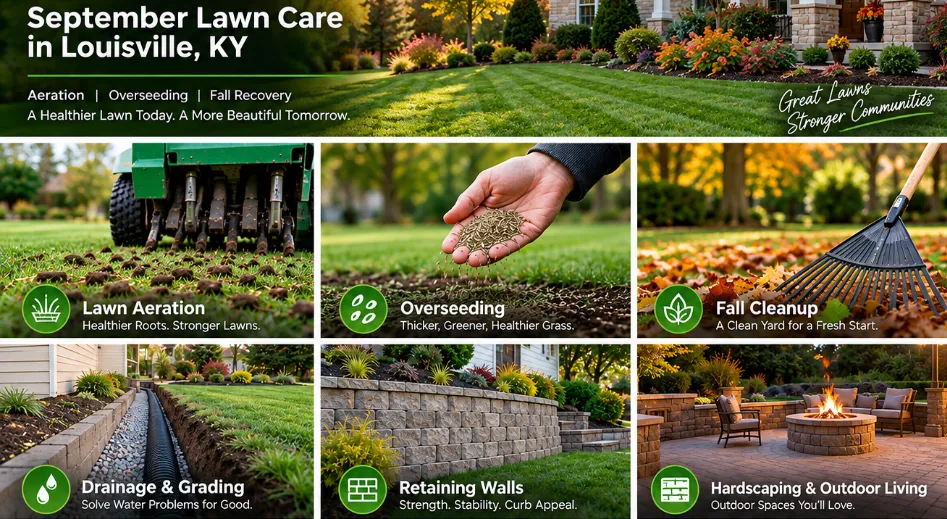
September Lawn Care in Louisville: Aeration, Overseeding & Fall Recovery
September Lawn Care in Louisville: Aeration, Overseeding & Fall Recovery
If your lawn looks tired after a long Kentucky summer, September is one of the best times to do something about it.
By the end of summer, Louisville lawns often show the effects of heat, dry stretches, foot traffic, compacted soil, weeds, and patchy grass. Some yards simply need a cleanup and a little attention. Others may need aeration, overseeding, grading, or a more complete landscaping plan.
That is why fall lawn care in Louisville matters.
At Kentuckiana Landscaping, we help homeowners across Louisville, surrounding Kentucky communities, and Southern Indiana improve outdoor spaces before colder weather arrives. Fall gives your lawn a chance to recover from summer stress while temperatures become more comfortable for cool-season grass.
If you are thinking about improving your yard this season, here are the most important things to know.
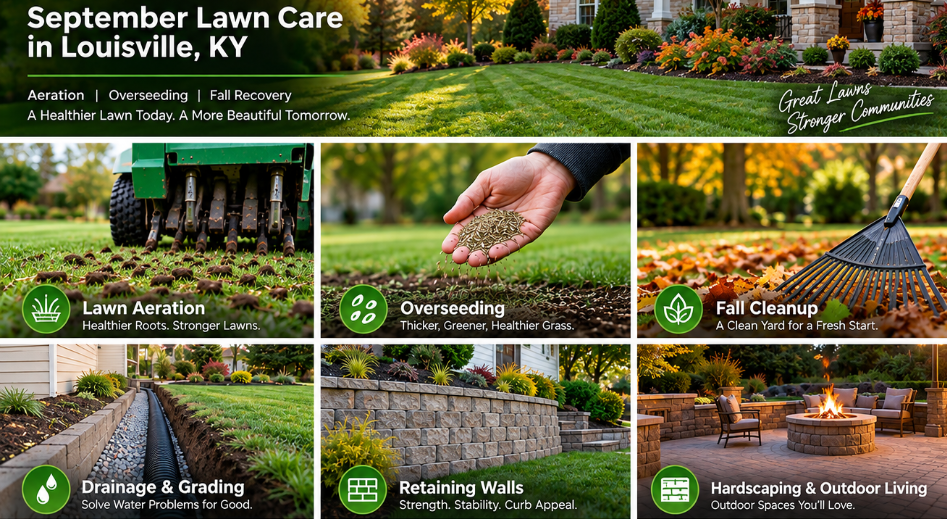
Why September Is Important for Louisville Lawns
September sits in an important transition period.
Summer heat begins to ease, but the soil is still warm enough to support grass establishment. That combination makes early fall especially useful for many lawn improvement projects.
Cool-season grasses commonly used in Kentucky, including tall fescue and Kentucky bluegrass, generally respond well to fall renovation. University of Kentucky turf guidance identifies late summer through early fall as the preferred period for reseeding cool-season lawns.
For Louisville homeowners, that means September can be a smart time to address:
Thin or bare areas
Summer lawn damage
Compacted soil
Weak grass growth
Uneven lawn areas
Landscape bed cleanup
Overgrown edges
Drainage-related lawn problems
Areas damaged by pets or heavy traffic
The goal is not simply to make the lawn look better for a few weeks. Good fall lawn care can help create stronger turf heading into winter and give your property a better start next spring.
Start by Looking at What Your Lawn Actually Needs
Not every lawn needs the same treatment.
Before overseeding or adding fertilizer, walk around the property and look closely at what is happening.
Ask yourself:
Are there large bare patches?
Does rainwater sit in certain areas?
Is the soil hard and compacted?
Are weeds taking over thin grass?
Is the lawn uneven?
Are roots exposed?
Are some areas constantly muddy?
Does water move toward the house instead of away from it?
Sometimes a lawn appears unhealthy because of a grass problem. Other times, the real issue is drainage, grading, shade, or poor soil conditions.
That distinction matters.
Adding new seed to a constantly wet area will not solve the underlying water problem. Likewise, repeatedly replacing grass on a heavily compacted section may only produce temporary results.
A professional landscaping evaluation can help identify whether the lawn needs basic maintenance or whether a larger correction is necessary.
[Internal link: Landscaping & Design Services]
Lawn Aeration Can Help Compacted Soil
One of the most common problems in residential lawns is soil compaction.
Over time, foot traffic, lawn equipment, pets, construction activity, and naturally dense soil can reduce the amount of air and water that reaches the root zone.
This can lead to:
Weak grass
Thin turf
Poor water absorption
Shallow roots
Increased runoff
Hard ground
Lawn aeration helps open the soil by creating small holes or removing small cores from the lawn.
For homeowners searching for lawn aeration in Louisville, fall is often a useful time to consider the service because cool-season grass is entering an active growth period.
Aeration can also improve seed-to-soil contact when overseeding is performed afterward.
However, aeration should not be treated as an automatic solution for every property. If the main issue is standing water or improper slope, drainage and grading may need to be addressed first.
[Internal link: Drainage & Grading Services]
Overseeding Can Fill Thin and Bare Lawn Areas
Summer can be hard on Kentucky lawns.
Heat, drought, disease pressure, traffic, and weeds can leave behind thin patches that do not fully recover on their own.
That is where overseeding can help.
Overseeding involves spreading new grass seed across an existing lawn to improve density and fill damaged areas.
For overseeding in Louisville KY, proper preparation is just as important as choosing the seed.
Good seed-to-soil contact matters. Simply throwing seed on top of thick thatch, leaves, or compacted soil may lead to disappointing results.
A typical preparation process may include:
Removing leaves and loose debris
Cutting the existing lawn to an appropriate height
Loosening or aerating compacted areas
Applying seed evenly
Keeping newly seeded areas consistently moist during establishment
Kentucky lawns commonly use cool-season grasses, especially turf-type tall fescue.
The best grass choice depends on sunlight, soil, drainage, how the yard is used, and the level of maintenance the homeowner wants.
Do Not Ignore Drainage Problems
This is one of the biggest mistakes homeowners make during fall lawn renovation.
If the lawn stays wet long after rainfall, grass problems may be a symptom rather than the actual issue.
Louisville-area properties can experience water problems because of heavy soil, low spots, downspout discharge, compacted ground, or grading that sends runoff in the wrong direction.
Signs of a drainage problem include:
Standing water after rain
Muddy lawn areas
Grass dying in the same location repeatedly
Soil erosion
Water collecting near patios or walkways
Water moving toward the foundation
Soggy areas around landscape beds
In those cases, the right solution may include yard regrading, French drains, downspout extensions, dry creek beds, or other drainage improvements.
Kentuckiana Landscaping provides drainage and grading services across Louisville and Southern Indiana for homeowners dealing with standing water and poor runoff.
[Internal link: Drainage & Grading Services]
Fixing the water problem first can give future landscaping and lawn improvements a much better chance of lasting.
Fall Is Also a Good Time to Clean Up Landscape Beds
Lawn care is only one part of a fall landscaping plan.
September is also a good opportunity to clean up the areas around your lawn.
Look at:
Garden beds
Mulch
Shrubs
Bed edges
Walkways
Tree rings
Overgrown plants
Dead seasonal growth
Fresh edging can immediately make a property look more organized. Removing weeds and debris from beds also prevents the landscape from looking neglected as the season changes.
Depending on the property, fall landscaping in Louisville may include:
Bed cleanup
Mulch installation
Shrub trimming
Edging
Plant replacement
Seasonal cleanup
Drainage corrections
Landscape redesign
A small amount of cleanup can make a noticeable difference in curb appeal.
[Internal link: Landscaping Services]
What About Fertilizing in the Fall?
Fall is an important feeding period for cool-season lawns.
University of Kentucky Extension notes that fall fertilization can support stronger, denser turf and help lawns recover from summer stress.
However, fertilizer should not be applied blindly.
The amount and type needed can depend on:
Existing soil fertility
Grass type
Lawn condition
Previous fertilizer applications
Soil pH
Property goals
A soil test can provide useful information before making major adjustments.
Too much fertilizer is not better. Applying the wrong amount can waste money, encourage excessive growth, or contribute to runoff.
If you are unsure, consider having the lawn evaluated before applying products.
Should You Remove Leaves Immediately?
A small amount of scattered leaves usually is not an emergency.
A thick layer of leaves is different.
Heavy leaf coverage can block sunlight and hold moisture against the lawn. Over time, that can weaken grass and create poor growing conditions.
During September and later in fall, try to prevent leaves from remaining in thick mats across the turf.
Options include:
Raking
Mulching leaves with a mower
Removing excess leaves
Incorporating suitable shredded leaves into landscape areas
The key is keeping the lawn from being completely covered for long periods.
Watch for Erosion Before Winter
Fall rain can expose grading and erosion problems that were less obvious during summer.
Walk around the property after a significant rainfall.
Look for:
Soil washing away from beds
Channels forming in the lawn
Mulch moving downhill
Exposed roots
Soil collecting at the bottom of slopes
Water cutting along sidewalks or patios
Minor erosion may be improved with landscaping or groundcover.
Larger slope problems may require grading, drainage work, or a retaining wall.
If a slope continues to wash out, adding more mulch every season is usually not a long-term fix.
[Internal link: Retaining Wall Services]
A properly planned retaining wall can help manage grade changes and create usable areas, but drainage behind the wall is critical for long-term performance.
Fall Hardscaping Can Improve How You Use the Yard
September lawn care does not have to stop at grass.
Many homeowners use fall to plan larger outdoor projects after spending summer noticing what is missing from the property.
That might include:
A paver patio
A new walkway
A fire pit area
Stone borders
Retaining walls
Concrete work
Outdoor seating areas
Hardscaping can reduce muddy or heavily worn lawn areas while making the yard more functional.
For example, if the family repeatedly walks across the same stretch of grass, a properly installed walkway may be a better long-term solution than continuously reseeding the area.
[Internal link: Hardscaping & Outdoor Living Services]
A Simple September Lawn Care Checklist
If you are wondering where to start, use this basic checklist.
Inspect the Lawn
Look for bare areas, weeds, compaction, erosion, standing water, and damaged turf.
Clean Up
Remove heavy debris, sticks, and excessive leaf buildup.
Identify Water Problems
Watch how water moves during rainfall before investing in new seed or landscaping.
Consider Aeration
Compacted lawns may benefit from aeration, especially when combined with overseeding.
Overseed Thin Areas
Early fall is one of the strongest windows for establishing cool-season grasses in Kentucky.
Refresh Beds
Clean edges, remove weeds, trim where appropriate, and refresh landscaping where needed.
Check Slopes
Address erosion before winter weather makes the problem worse.
Plan Larger Projects
If you are considering patios, retaining walls, drainage, or a landscape redesign, fall can be a good time to get an estimate and create a plan.
When Should You Call a Landscaping Professional?
Many homeowners can handle basic mowing, leaf removal, and small lawn repairs themselves.
Professional help becomes especially useful when you are dealing with:
Large bare lawn areas
Significant grading problems
Standing water
Persistent erosion
Major landscape redesign
Retaining wall needs
Drainage installation
Large mulch and bed projects
Hardscaping
Multiple outdoor projects happening together
The biggest advantage is getting the order of work right.
For example, it makes little sense to install new grass first and then dig through it for a drainage system several weeks later.
A good landscaping plan considers the entire property before work begins.
Fall Lawn Care in Louisville Starts With the Right Plan
September is one of the most useful months for Louisville homeowners who want to improve their lawns and landscapes.
The weather begins moving away from summer extremes, cool-season grass enters an important growth period, and there is still time to correct problems before winter.
The best approach is simple: do not treat every lawn problem as a grass problem.
Look at the soil. Look at the slope. Look at drainage. Look at how the property is used.
Sometimes the right solution is overseeding.
Sometimes it is aeration.
Sometimes a soggy lawn needs grading or a French drain before anything else.
And sometimes the biggest improvement comes from combining lawn work with better beds, walkways, retaining walls, or hardscaping.
Kentuckiana Landscaping helps homeowners across Louisville, Kentucky, and Southern Indiana plan and complete landscaping, drainage, hardscaping, retaining wall, concrete, deck, fencing, and exterior improvement projects.
If your lawn or outdoor space needs attention this fall, call 502-685-5514 to request a free quote.
Complete Your Outdoor Upgrade With Durable Concrete Coatings
If you’re already improving your landscaping, patio, walkways, or outdoor living space, it may also be a good time to refresh nearby concrete surfaces. 502 Epoxy provides professional garage floor epoxy, polyaspartic floor coatings, and concrete repair and preparation for homeowners and businesses across the Louisville area.
A professionally coated garage, basement, workshop, or concrete floor can complement exterior improvements by creating a cleaner, more durable, and easier-to-maintain space. If your project extends beyond the yard, visit 502 Epoxy to explore local concrete coating options.
Frequently Asked Questions
Is September a good time to overseed a lawn in Louisville?
Yes. Early fall is generally one of the best periods for establishing cool-season grasses commonly used in Kentucky lawns because temperatures are moderating while the soil remains warm.
Does my Louisville lawn need aeration every year?
Not necessarily. Aeration is most useful when soil is compacted or when turf has difficulty developing healthy roots. High-traffic lawns and dense soils may benefit more frequently.
Can overseeding fix bare spots caused by standing water?
Not by itself. If poor drainage is causing the grass to fail, the water issue should be corrected first. Otherwise, newly seeded grass may continue to struggle.
What grass works well in Kentucky lawns?
Tall fescue is widely used in Kentucky, while Kentucky bluegrass is also common. The best choice depends on sunlight, soil, drainage, use, and maintenance expectations.
Can Kentuckiana Landscaping help with more than lawn care?
Yes. Kentuckiana Landscaping provides landscaping and design, hardscaping, drainage and grading, retaining walls, concrete, decks, fencing, excavation, and other exterior improvement services across Louisville and Southern Indiana.
How do I request an estimate?
Call Kentuckiana Landscaping at 502-685-5514 or submit a quote request through KentuckianaLandscaping.com.
